THREE:CHAPTER I. INTRODUCTION.Another principle would serve admirably to draw still closer the important connection between a misdeed and its punishment, and that is, that the latter should as far as possible conform to the nature of the crime. This analogy facilitates marvellously the contrast that ought to exist between the impulse to[188] the crime and the counter-influence of the punishment, the one, that is, diverting the mind and guiding it to an end quite different from that to which the seductive idea of transgressing the law endeavours to lead it.
FORE:The more cruel punishments become, the more human minds harden, adjusting themselves, like fluids, to the level of objects around them; and the ever living force of the passions brings it about, that after a hundred years of cruel punishments, the wheel frightens men only just as much as at first did the punishment of prison.
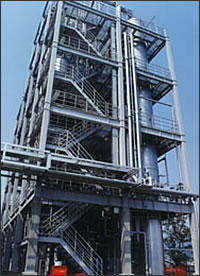
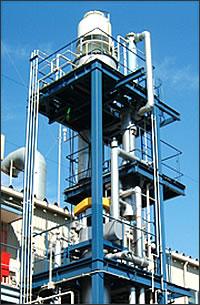
Methanol refinement systems, amyl alcohol refinement systems, ethanol refinement systems, hexanol distillation systems, propanol refinement systems, cyclohexanol distillation systems, isopropanol dehydration systems, ethylene glycol recovery systems, and butanol distillation systems.
FORE:If pleasure and pain are the motors of sensitive beings, if the invisible lawgiver of humanity has decreed rewards and punishments as one of the motives to impel men to even their noblest endeavours, the inexact distribution of these motives will give rise to that contradiction, as little noticed as it is of common occurrence, namely, that the laws punish crimes which are entirely of their own creation. If an equal penalty is attached to two crimes of unequal injury to society, the greater crime of the two, if it promise a greater advantage than the other, will have no stronger motive in restraint of its perpetration.[197] Whoever, for example, sees the same punishment of death decreed for the man who kills a pheasant and the man who slays his fellow or falsifies an important document, will draw no distinction between such crimes; and thus moral sentiments, the product only of many ages and of much bloodshed, the slowest and most difficult attainment of the human mind, dependent, it has been thought, on the aid of the most sublime motives and on a parade of the gravest formalities, will be destroyed and lost.
Hexane distillation systems, tall oil distillation systems, benzene distillation systems, lubricating oil refinement systems, xylene-free distillation systems, low-boiling gas distillation systems, ethylbenzene recovery systems, fusel oil distillation systems, naphthalene distillation systems, propylene recovery systems, and turpentine oil distillation systems.
FORE:The second pretext for torture is its application to supposed criminals who contradict themselves under examination, as if the fear of the punishment, the uncertainty of the sentence, the legal pageantry, the majesty of the judge, the state of ignorance that is common alike to innocent and guilty, were not enough to plunge into self-contradiction both the innocent man[154] who is afraid, and the guilty man who seeks to shield himself; as if contradictions, common enough when men are at their ease, were not likely to be multiplied, when the mind is perturbed and wholly absorbed in the thought of seeking safety from imminent peril.
Ether distillation systems, camphor distillation systems, epichlorohydrin distillation systems, aniline distillation systems, dioxane refinement systems, acetonitrile distillation systems, furfural refinement systems, formalin distillation systems, cyclohexane distillation systems, monoethanolamine rectification systems, polyglycol ether distillation systems, dimethylformamide recovery systems, acrylic glycol ether distillation systems, acrylonitrile refinement systems, acetone recovery systems, pyridine distillation systems, methyl ethyl ketone recovery systems, picoline distillation systems, methyl isobutyl ketone recovery systems, and acetaldehyde recovery systems.